Plamu – Mi'kmaq Culture : Tradition
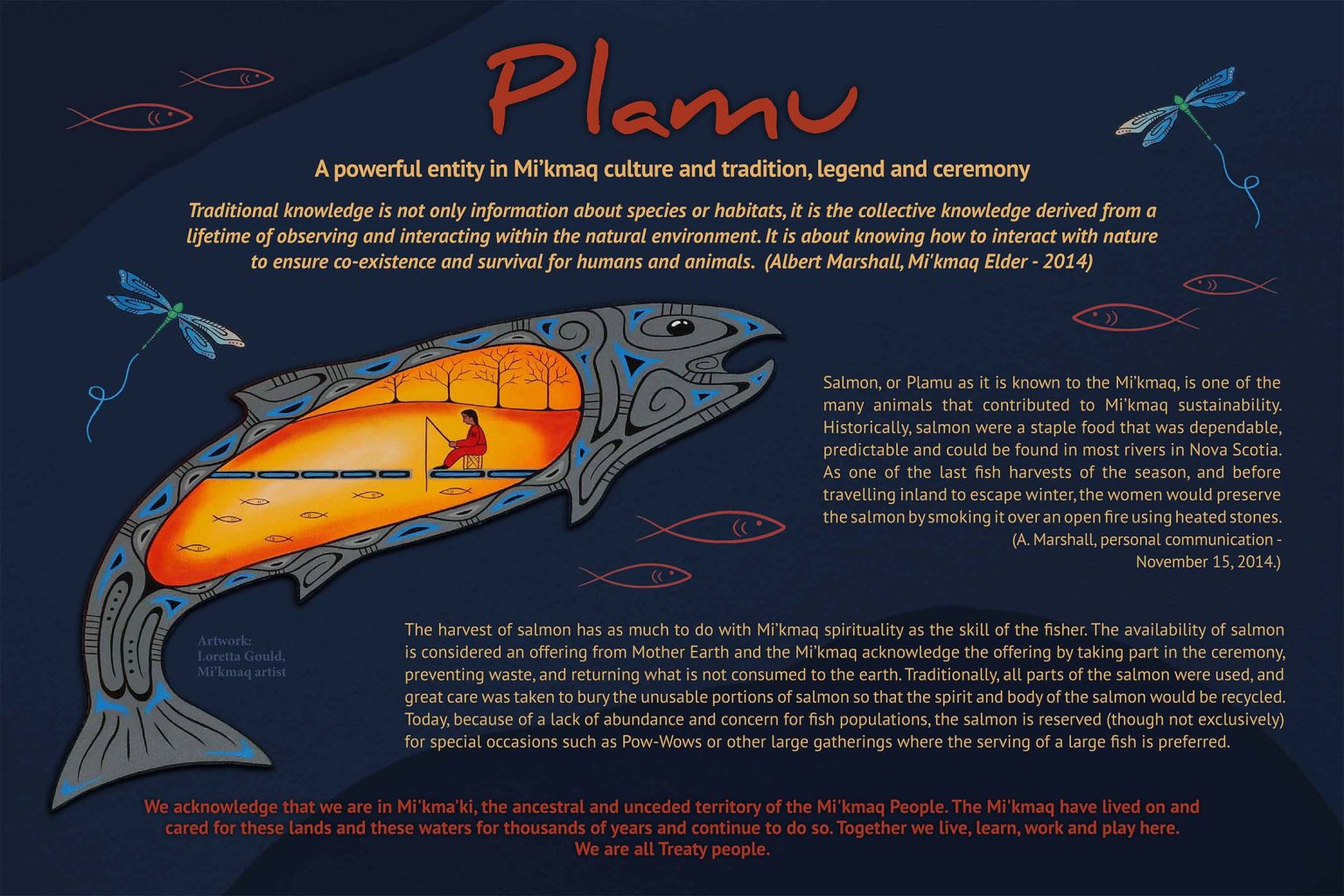
Plamu
A powerful entity in Mi’kmaq culture and tradition, legend and ceremony
Traditional knowledge is not only information about species or habitats, it is the collective knowledge derived from a lifetime of observing and interacting within the natural environment. It is about knowing how to interact with nature to ensure co-existence and survival for humans and animals.
(Albert Marshall, Mi’kmaq Elder – 2014)
Salmon, or Plamu as it is known to the Mi’kmaq, is one of the many animals that contributed to Mi’kmaq sustainability. Historically, salmon were a staple food that was dependable, predictable and could be found in most rivers in Nova Scotia. As one of the last fish harvests of the season, and before travelling inland to escape winter, the women would preserve the salmon by smoking it over an open fire using heated stones.
(A. Marshall, personal communication – November 15, 2014.)
The harvest of salmon has as much to do with Mi’kmaq spirituality as the skill of the fisher. The availability of salmon is considered an offering from Mother Earth and the Mi’kmaq acknowledge the offering by taking part in the ceremony, preventing waste, and returning what is not consumed to the earth. Traditionally, all parts of the salmon were used, and great care was taken to bury the unusable portions of salmon so that the spirit and body of the salmon would be recycled. Today, because of a lack of abundance and concern for fish populations, the salmon is reserved (though not exclusively) for special occasions such as Pow-Wows or other large gatherings where the serving of a large fish is preferred.
Land Acknowledgement
We acknowledge that we are in Mi’kma’ki, the ancestral and unceded territory of the Mi’kmaq People. The Mi’kmaq have lived on and cared for these lands and these waters for thousands of years and continue to do so. Together we live, learn, work and play here. We are all Treaty people.
Fun Facts
The Rouge Flambé (Leaping Salmon) by Royal Dalton is one of the Museum’s treasures. It has a special glaze that is reminiscent of that used by Chinese potters of the Sung and Ming Dynasties.

